Featured article
The classic fortune-telling toy

Ask a yes-or-no question, then shake the ball.
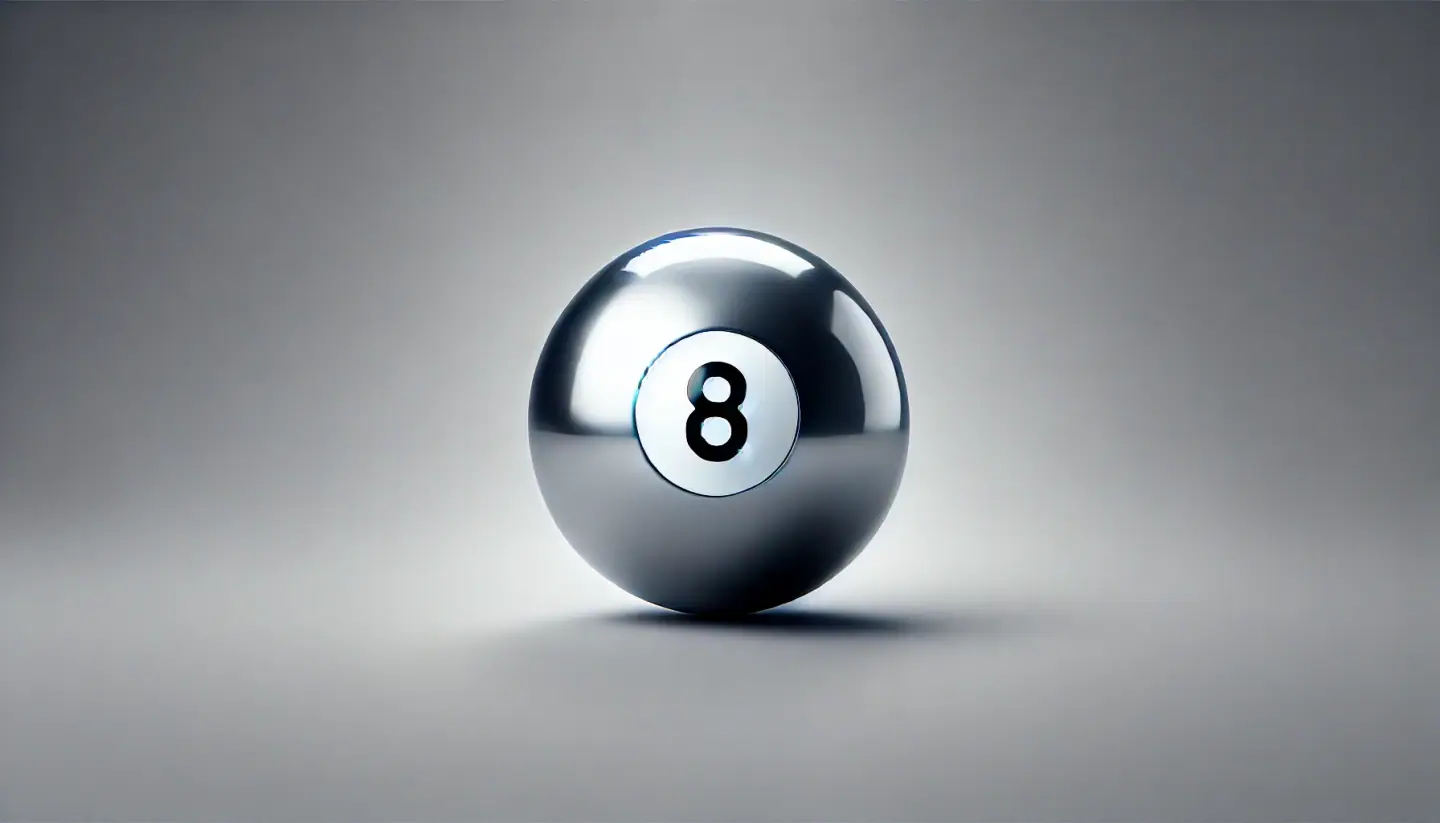
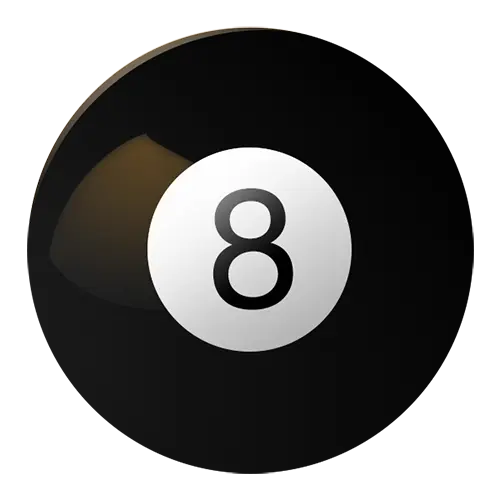
The Magic 8 Ball is a black plastic sphere designed to resemble an oversized eight ball from billiards. It's a novelty toy used for fortune-telling or seeking advice. Users ask a yes-or-no question, shake the ball, and turn it over to reveal an answer in a small window.
For those who want the fun and mystery of the Magic 8 Ball without the physical toy, online versions of the Magic 8 Ball are available. These digital renditions replicate the experience of asking questions and receiving random answers, providing a convenient way to enjoy this classic novelty from your computer or smartphone.
The online Magic 8 Ball ensures the iconic toy's charm continues to thrive in the digital age, offering the same thrill of anticipation and surprise with a modern twist.
Invented in 1946 by Albert C. Carter and Abe Bookman, the Magic 8 Ball was inspired by a spirit writing device used by Carter's mother, a clairvoyant in Cincinnati. His first version, in 1946, was a cylinder called the Syco-Seer; the Syco-Slate was his mother’s spirit-writing device.
After Carter's passing, Bookman improved the design. In 1950, at the request of Brunswick Billiards, the device was encased in the familiar black-and-white 8-ball form. This redesign propelled the Magic 8 Ball into popular culture, and it became a beloved toy for both children and adults.
The Magic 8 Ball is hollow and contains a 20-sided die (an icosahedron) floating in a dark blue alcohol solution. Each face of the die has a different message printed in raised letters.
How to Use:
Note: Avoid shaking the ball vigorously to prevent bubbles that can obscure the answer.
Over the decades, the Magic 8 Ball has remained a popular toy and has appeared in various movies, TV shows, and other media. Its simplicity and novelty have made it a staple in toy collections and a fun accessory in offices and homes.
The Magic 8 Ball contains 20 possible answers categorized into three types:
The Magic 8 Ball is more than just a toy; it's a piece of cultural history that has entertained and intrigued people for generations. Its enduring popularity speaks to our fascination with fate, chance, and the mysteries of the future.
You ask a yes-or-no question and shake the ball. Inside, a 20-sided die floats in dark blue liquid; when the ball settles, whichever face has drifted against the window is the answer you read. There is no mechanism choosing for you - it is chance, which is exactly what makes it fun. The long version is here.
A sealed black plastic shell, a cylinder of dark blue alcohol-based liquid, a floating icosahedron (20-sided die) with a message moulded into each face, and the clear window you read through. See the full breakdown.
Twenty: 10 affirmative, 5 non-committal and 5 negative. That split is why the ball feels encouraging - half of everything it says is a yes. More on the count.
Affirmative: It is certain · It is decidedly so · Without a doubt · Yes definitely · You may rely on it · As I see it, yes · Most likely · Outlook good · Yes · Signs point to yes.
Non-committal: Reply hazy, try again · Ask again later · Better not tell you now · Can't predict now · Concentrate and ask again.
Negative: Don't count on it · My reply is no · My sources say no · Outlook not so good · Very doubtful.
Yes. The ball at the top of this page is free to use, needs no account and no download, and works the same on a phone as on a desktop. Ask as many questions as you like.
No - and it was never meant to be. Every answer is drawn at random from the same twenty, so the ball has no more insight into your future than a coin toss. What it is genuinely good at is breaking a deadlock on a small decision. Why it still feels accurate.
Anything that can be answered yes or no - "Should I text them back?", "Will it rain on Saturday?", "Is this the right job?". Open questions such as "what should I do?" have no answer among the twenty, so the reply will read as nonsense.
Albert C. Carter and Abe Bookman, in 1946. Carter based it on a spirit-writing device his mother, a Cincinnati clairvoyant, used; Bookman put it inside the black-and-white eight ball in 1950 at Brunswick Billiards' request. The full history.
Featured article
The ball answers one kind of question. Here are a hundred already in the right shape, and the rule for fixing the ones that are not.
Read more about 100 Magic 8 Ball Questions to Ask →Twenty - one per face of the die inside. Here they all are, plus why the number is twenty and why half of them are a yes.
Read more about How Many Answers Does a Magic 8 Ball Have? →The same twenty answers and the same odds as the plastic ball, minus the liquid - plus what the toy is actually good for.
Read more about The Magic 8 Ball Online: Your Go-To Fortune Teller →It was not invented as a ball, and it failed for four years first. From a Cincinnati clairvoyant to Mattel, by way of a billiards promotion.
Read more about The History of the Magic 8 Ball →Far less than people expect, and one component almost nobody knows is there. A part-by-part look inside the toy - including why it is not full of liquid.
Read more about What's Inside a Magic 8 Ball? →No, and it cannot be. But the reason it so often feels accurate is real, and it has nothing to do with the toy.
Read more about Are Magic 8 Balls Accurate? →No electronics, no mechanism reading your question - just a twenty-sided die that is very slightly buoyant. Here is exactly what happens between the shake and the answer.
Read more about How Does a Magic 8 Ball Work? →A party game that has been sitting in plain sight for seventy years. Five ways to play, from a two-minute icebreaker to something that runs all evening.
Read more about Magic 8 Ball Games: 5 Ways to Play →All twenty answers in one table, what each one is actually telling you, and how to handle the five replies that seem to say nothing at all.
Read more about Magic 8 Ball Answers: The Complete Guide →